
MyFitnessPal
App Redesign
Introduction
MyFitnessPal is a comprehensive health and wellness app designed to help users eat more mindfully and achieve their weight and overall health goals. It features one of the world’s largest nutrition databases, with over 14 million food entries that provide detailed nutritional values and calorie counts based on portion sizes.
Users can log their meals to track eating habits, monitor progress, and gain insights into their daily nutrition. Beyond food tracking, MyFitnessPal offers motivational videos, guided exercise routines, and healthy recipes curated from the MyFitnessPal Blog, making it a holistic tool for building sustainable lifestyle habits.
Problem
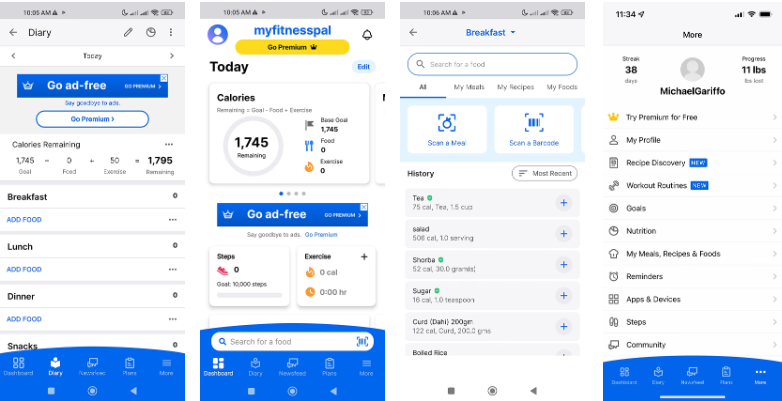
Users often struggle to remain consistent with MyFitnessPal due to its outdated interface. The design feels old‑fashioned, and the presentation of information lacks clarity. The home page places heavy emphasis on the MyFitnessPal Blog, featuring videos and calorie counts, which results in a cluttered and overwhelming layout.
The app does not feel engaging or personalized, leaving users without a sense of connection. Its navigation is not intuitive, which diminishes the overall user experience. As a result, even though MyFitnessPal boasts an extensive food database, users are not motivated to interact with the app regularly.
Design Approach
I approached the design based on the users’ emotional and psychological needs. By understanding their motivations, I was able to create an experience that was engaging and encouraged users to correctly and consistently use the app.
To accomplish this, I examined the reasons why users were using the app and the challenges they faced. Rather than focusing only on the what and how of their needs, I also sought to understand the why. I ensured that a bottom‑up design process was followed, where user input and research data were considered at every stage.
Persona
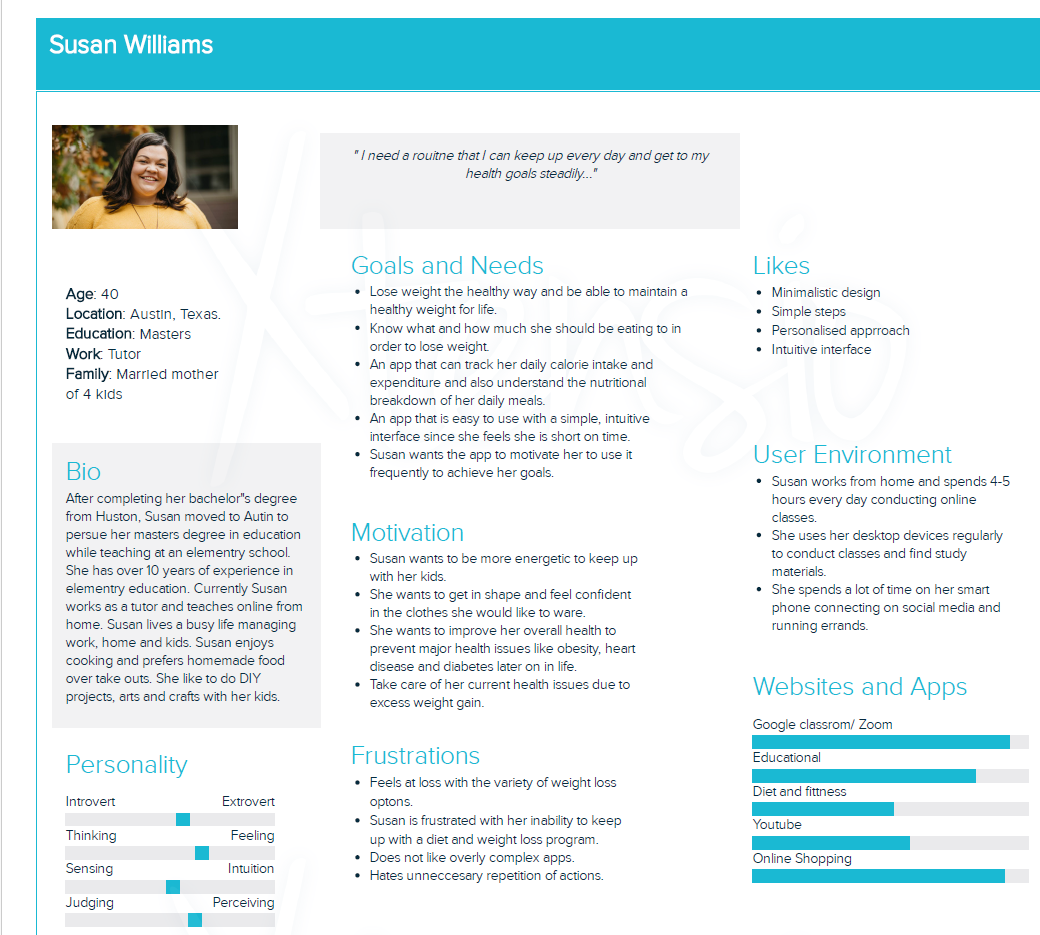
The persona “Susan” represents the target users of fitness apps. By having a clear understanding of the nature of the user, I was able to build a better user experience. This persona helped me understand not just the user requirements but also the emotional and ecological needs of the target users.
During the design and prototyping phase, these characteristics guided me to make better decisions. I believe that by satisfying the user needs of a persona like Susan, I was able to redesign the user interface in a way that appealed to the needs of a significant portion of the user base.
Low Fidelity Wireframe
Usability Testing and Takeaways
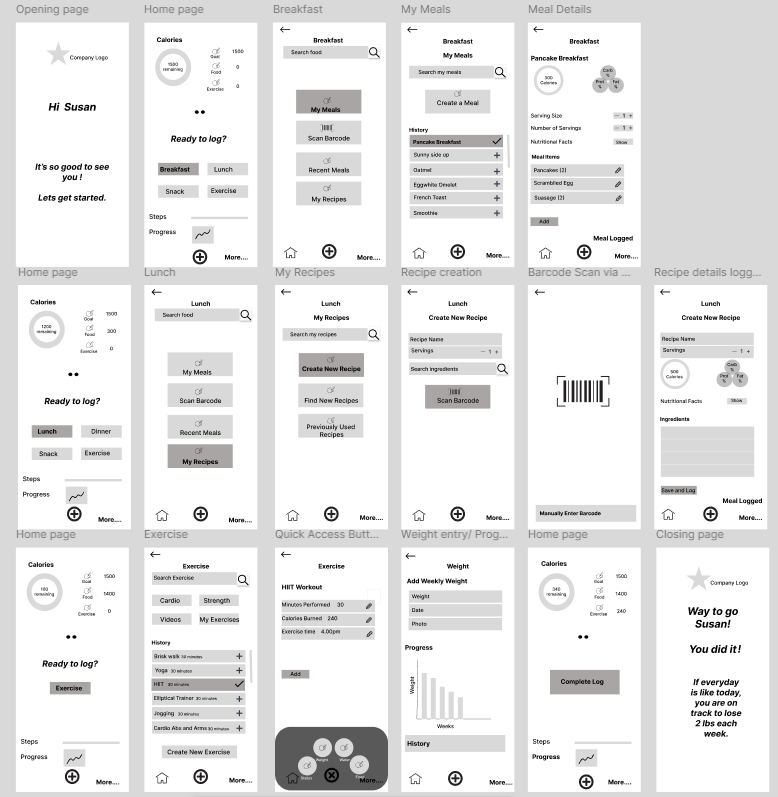
To validate our redesign, we conducted hallway usability testing with 5 participants. Users found the new interface significantly easier to navigate than the original. They appreciated the cleaner layout, more intuitive flow, and the ability to access core features with less friction.
They especially responded positively to the reduced emphasis on calorie counting. Several shared that they would be more likely to use the redesigned app consistently, as it supported a healthier, more sustainable relationship with fitness.
This project was a valuable learning experience in applying user-centered design principles. It highlighted the importance of balancing functionality with emotional impact, and demonstrated how thoughtful design decisions can directly influence user motivation, behavior, and retention.